The Unique Challenges of Heavy Equipment Transport
Moving heavy equipment — excavators, cranes, industrial presses, generators, transformers, and other oversized machinery — presents challenges that ordinary freight transportation does not encounter. The loads are often wider, taller, and heavier than standard legal limits, requiring special permits, detailed route planning, and specialized equipment. A mistake in any of these areas can result in road damage, bridge strikes, downed utility lines, or accidents that endanger the public and destroy the equipment being transported. The stakes are high, and the margin for error is small.
This guide covers the essential safety protocols and permit requirements that every shipper should understand when planning a heavy equipment move, whether it is a single excavator heading to a job site or a fleet of industrial machinery relocating to a new manufacturing facility.
Understanding Legal Limits and When Permits Are Required
Every jurisdiction in the US and Canada establishes legal limits for vehicle dimensions and weight on public roads. In the United States, federal law sets maximum limits of 80,000 pounds gross vehicle weight, 8.5 feet in width, 13.5 feet in height, and 48 to 53 feet in length for trailers on the Interstate Highway System. Canadian provinces have their own limits, which vary but are generally similar. Any load that exceeds these limits in any dimension requires an oversize or overweight permit from every state or province through which the shipment will travel.
Permit requirements vary significantly by jurisdiction. Some states issue single-trip permits that can be obtained online within hours, while others require detailed engineering analysis, bridge structural reviews, or advance coordination with highway departments. Some jurisdictions restrict oversize travel to specific hours, prohibit oversize moves during holidays or adverse weather, or require law enforcement escorts for the widest and heaviest loads. Understanding these requirements before the move is planned — not after — is critical to avoiding delays, fines, and safety incidents.
Route Planning for Oversized Loads
Route planning for heavy equipment goes far beyond entering an origin and destination into a navigation system. A proper route survey for an oversized load must evaluate vertical clearances at every overpass, bridge, and utility crossing along the route. It must assess bridge weight ratings to ensure that the combined weight of the truck, trailer, and load does not exceed the structural capacity of any bridge on the route. It must identify tight turns, narrow roads, construction zones, and other obstacles that could be problematic for an oversized load.
For the widest and tallest loads, route surveys may need to be conducted in person by a pilot car driver who physically drives the route in advance, measuring clearances and identifying potential problems. In some cases, the planned route may not be feasible due to a single low overpass or a narrow bridge, requiring an alternate route that adds miles but provides the necessary clearances. Experienced heavy-haul carriers maintain databases of route information for common lanes and can often identify optimal routes quickly, but every new or unusual move should receive a thorough survey before dispatch.
Load Securement Standards
Load securement for heavy equipment is governed by the Federal Motor Carrier Safety Administration (FMCSA) in the United States and Transport Canada's National Safety Code in Canada. Both frameworks establish minimum requirements for the number, type, and working load limit of securement devices based on the weight and characteristics of the load. However, minimum compliance is not the goal — the goal is to secure the equipment so that it cannot shift, tip, or fall under any conditions the truck might encounter during transit, including emergency braking, sudden lane changes, and driving on uneven road surfaces.
Heavy equipment is typically secured using a combination of grade 70 transport chains with load binders, synthetic web straps rated for the required working load limit, and blocking and bracing materials that prevent movement at the contact points between the equipment and the trailer deck. The securement plan should account for the equipment's center of gravity, which may be asymmetric or elevated, creating tipping forces that straight-line securement calculations may underestimate. Equipment with hydraulic arms, booms, or other articulating components should have those components locked, pinned, and independently secured to prevent movement during transit.
Safety Protocols for Loading and Unloading
More accidents in heavy equipment transport occur during loading and unloading than during transit. The process of driving self-propelled equipment onto and off of a trailer, or the use of cranes and rigging to lift non-self-propelled equipment, presents significant risks if not managed with proper procedures. Loading areas should be level and firm, ramps should be rated for the weight of the equipment, and all personnel should be clear of the load path during the loading operation. For crane lifts, the rigging plan should be engineered for the specific piece of equipment, with attention to lift points, sling angles, and ground bearing capacity under the crane's outriggers.
Choosing a Heavy Equipment Carrier
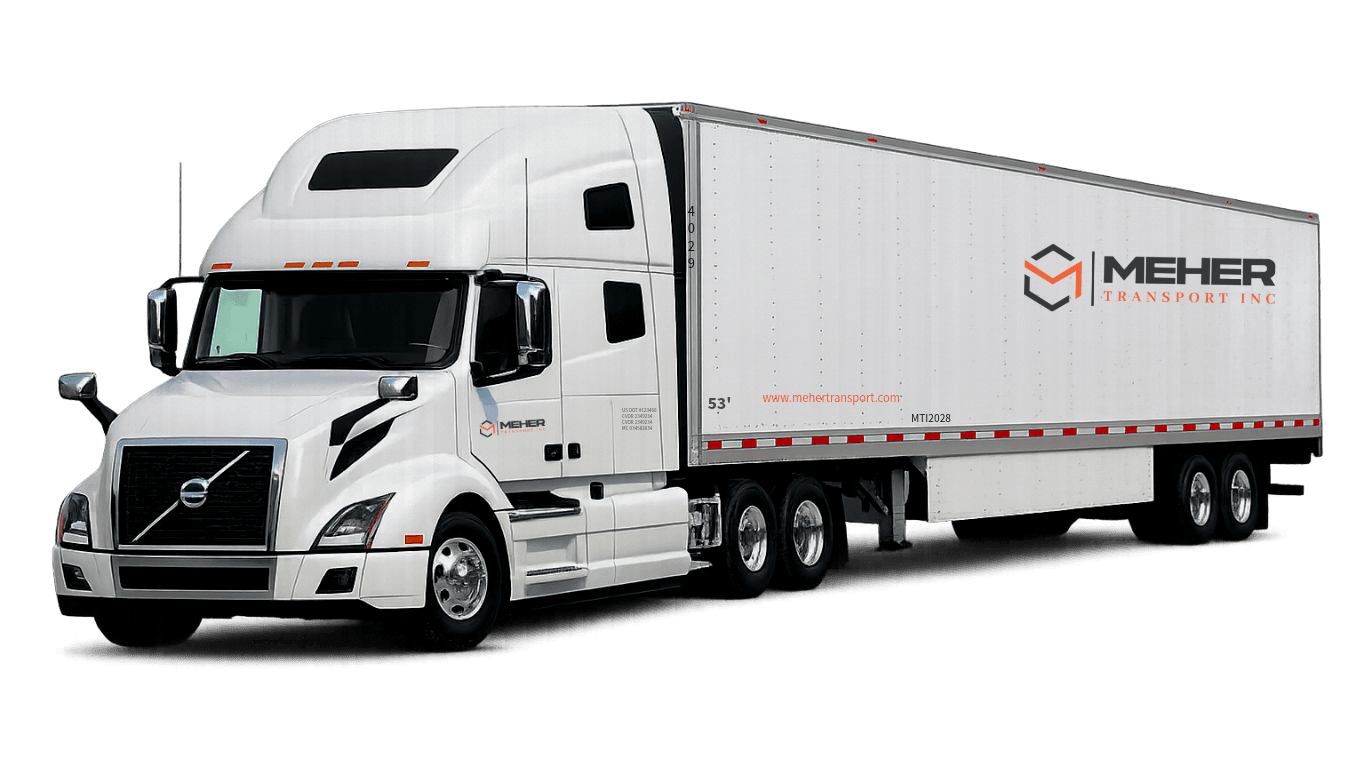
The carrier you select for heavy equipment transport should have demonstrated experience with loads similar to yours. Ask about their permitting capabilities, their route planning process, their drivers' training and experience with heavy-haul operations, and their insurance coverage for high-value equipment. A carrier that regularly handles oversized loads will have established processes for every aspect of the move, from initial assessment through delivery. They will also have the right equipment — flatbeds, step-decks, double-drops, and removable gooseneck trailers — to accommodate your specific load dimensions. At Meher Transport, our heavy equipment division handles everything from single-piece machinery moves to complex multi-load project relocations, providing end-to-end management of permitting, route planning, securement, and delivery.